
Rove is a lending platform for gig workers that reads blended income across every platform they earn from — for the driver, the courier, or the freelancer earning real, substantial income that no single pay stub can prove. That blended picture gets built the way a human underwriter would build it, then shown back to the borrower, to the underwriter reviewing the case, and to the lender whose brand the product runs under — not reduced to a score.

Gig income doesn't come with a pay stub, and lending was never built to read around that. An estimated 70–76 million Americans now do some form of gig or freelance work — more than a third of the U.S. workforce — earning across rideshare, delivery, and invoiced freelance platforms that traditional credit scoring has no clean way to combine. The gap shows up as real financial strain: 73% of gig workers say inconsistent income makes traditional loans inaccessible to them, and nearly half of applicants with irregular income get rejected outright by traditional banks. Locked out of standard credit, 61% turn to no-credit-check or soft-pull loans instead — the predatory, short-term credit products that target this exact blind spot. The income is real. The underwriting model just wasn't built to see it.

Lending is one of the largest and steadiest categories in the fintech app market on both iOS and Android, and gig-worker underwriting sits in a real, underserved gap inside it: borrowers with substantial, provable income who get filtered out by a scoring model built for a single W-2 employer. Rove was scoped deliberately around that gap — one borrower segment, designed deep rather than wide — with the underlying engine and component system built so the same logic could extend to other underserved segments (immigrant thin-file borrowers, caregivers) later, without a rebuild.
Three roles ground every journey map and screen in this project — a borrower applying for credit, the underwriter who reviews the harder cases, and the partner admin who brings Rove to his own platform's workers.

Drives rideshare and delivers for a second platform, with invoiced freelance work on the side. Income moves week to week but is substantial and consistent over a longer window. Has been declined before by a lender that only looked at one pay stub, and is wary of predatory short-term credit that specifically targets gig workers.

Reviews a queue of applications the alternative-data engine flags for manual review. Trained on traditional credit files — blended, multi-platform income is a pattern she hasn't built intuition for yet, so she needs the reasoning behind every recommendation, not just the number.

A product and operations lead at a gig-platform-affiliated lender, standing up this lending line as a new department inside an already-established company, not a founder starting from zero. He configures the borrower-facing brand experience and checks portfolio health — but never uses the branded product himself.
A recommendation that argues for the borrower, not the lender.
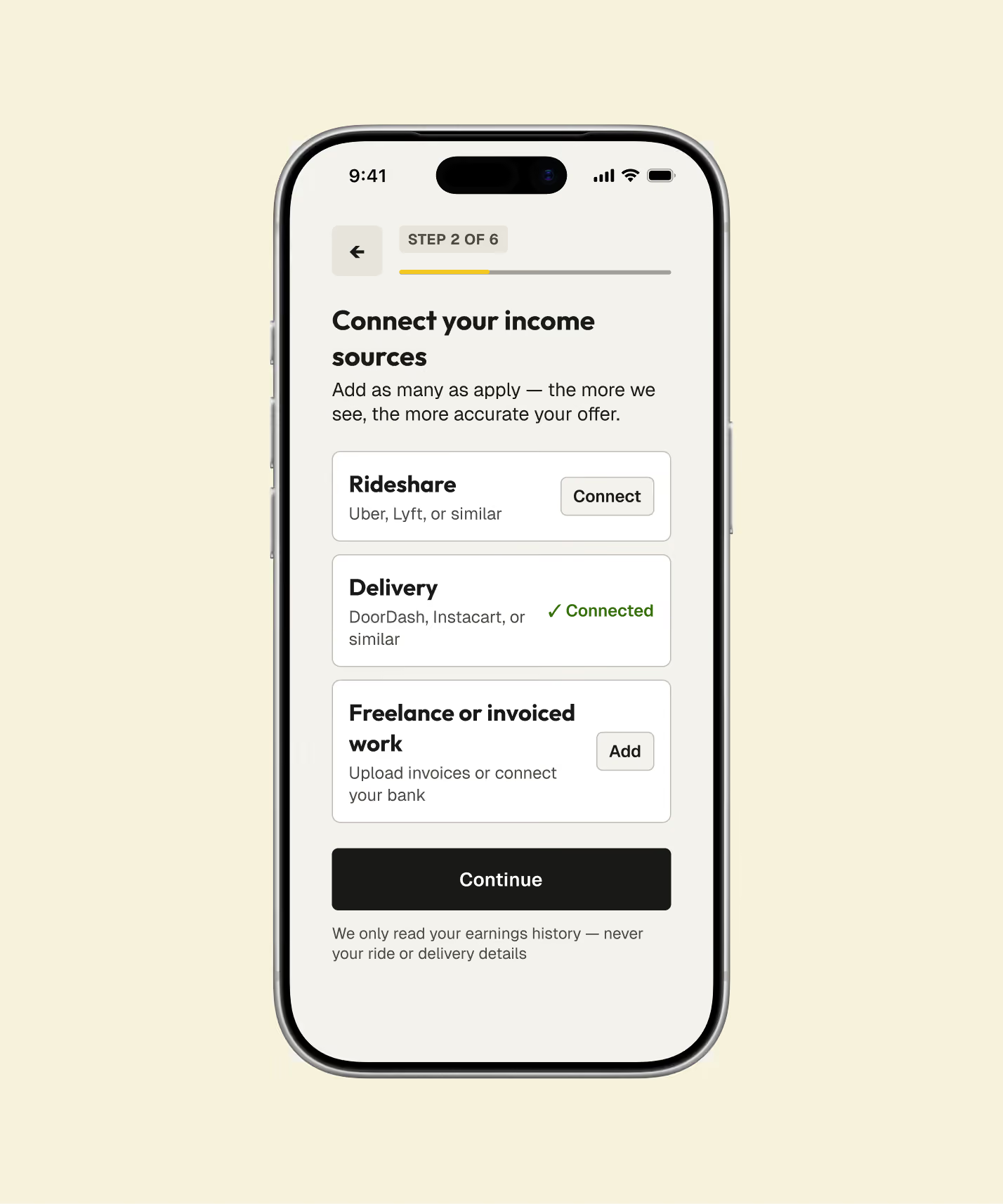
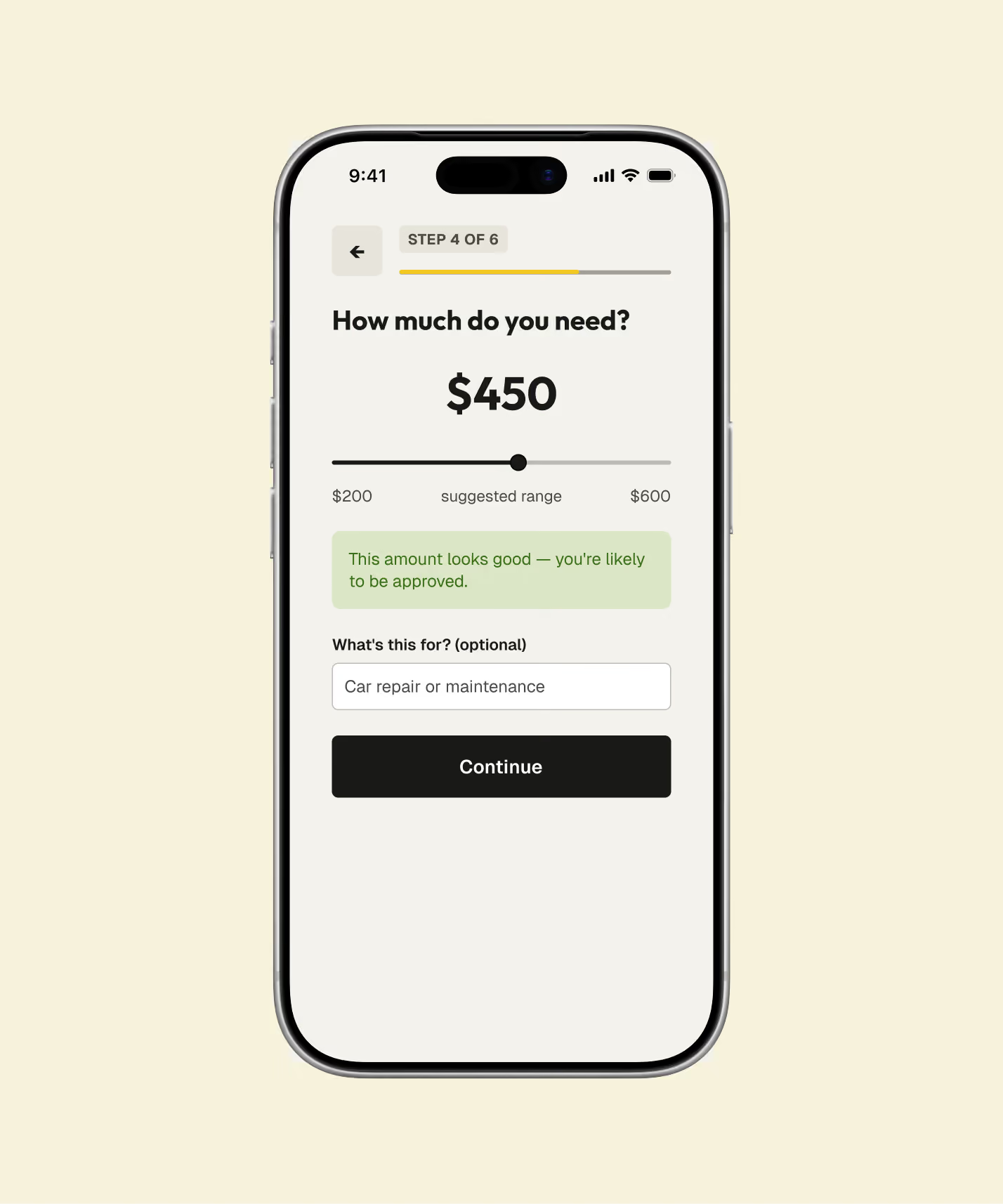
The underwriting logic pulls earnings from every connected source, normalizes each to a common monthly period, and blends them into one figure — shown transparently, source by source, rather than as a single opaque number. A consistency score, built from variance across the trailing period and not just the average, separates a steady multi-platform earner from a genuinely volatile one. That same data drives a guided loan-amount range instead of a blank field, with a live indicator as Jasmine adjusts her request so she chooses with visibility into the likely outcome, not by guessing.
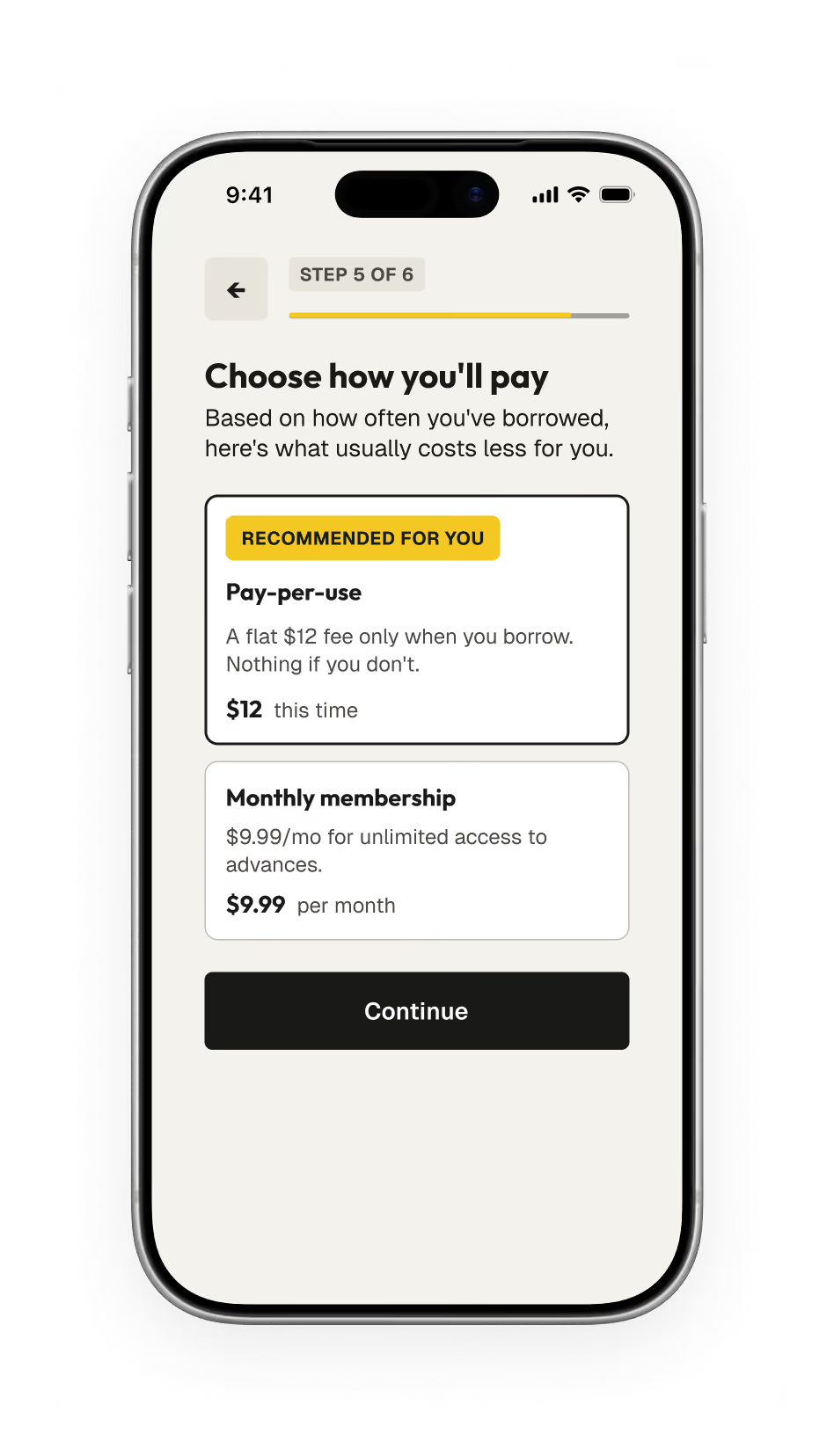
The sharpest design decision in the system sits in monetization: Rove offers a flat per-advance fee and a subscription option, and recommends one by reusing the same income-consistency data already calculated for underwriting — with the recommendation logic explicitly optimized for the borrower's lowest expected cost, not the lender's revenue.
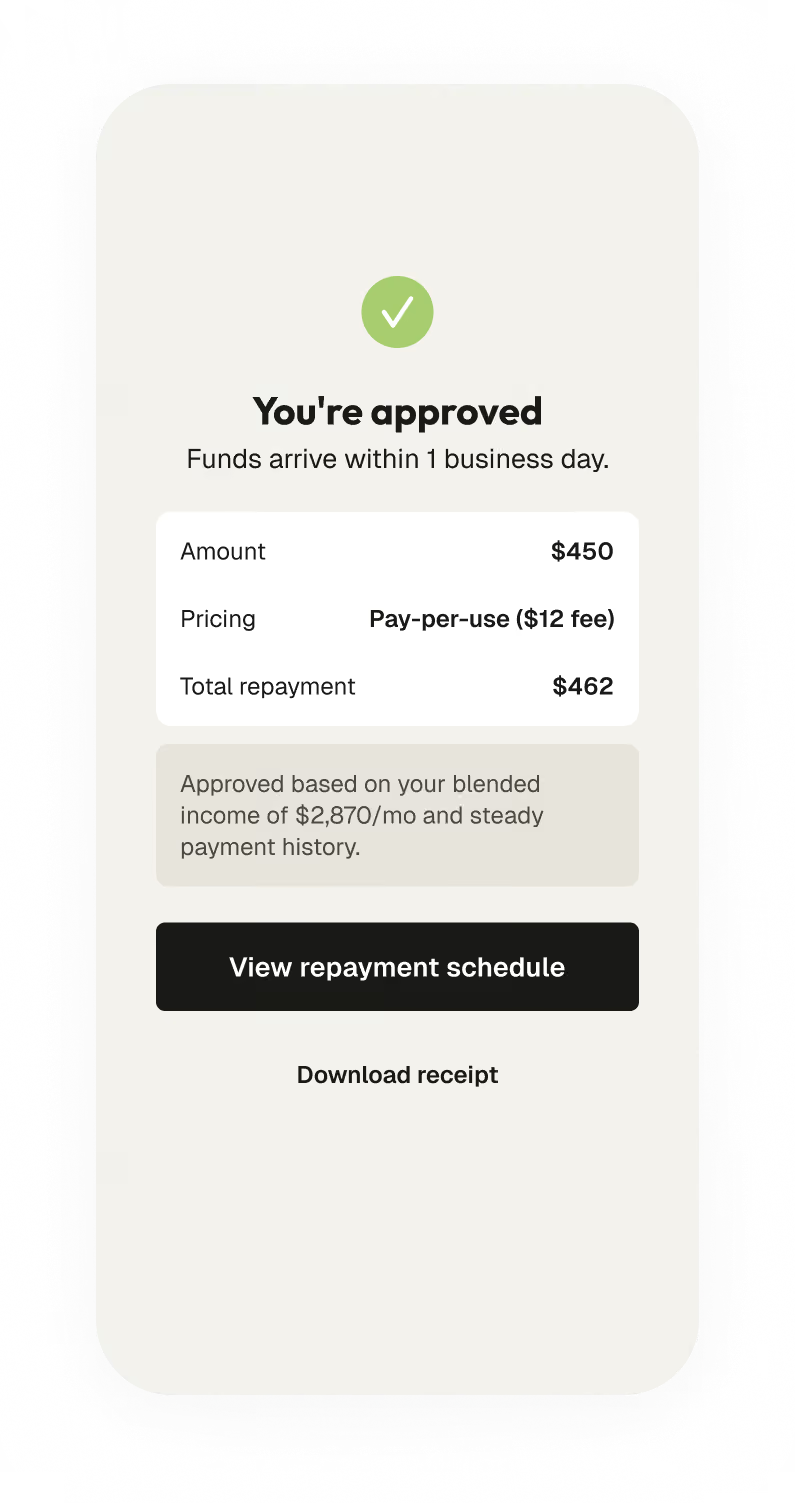
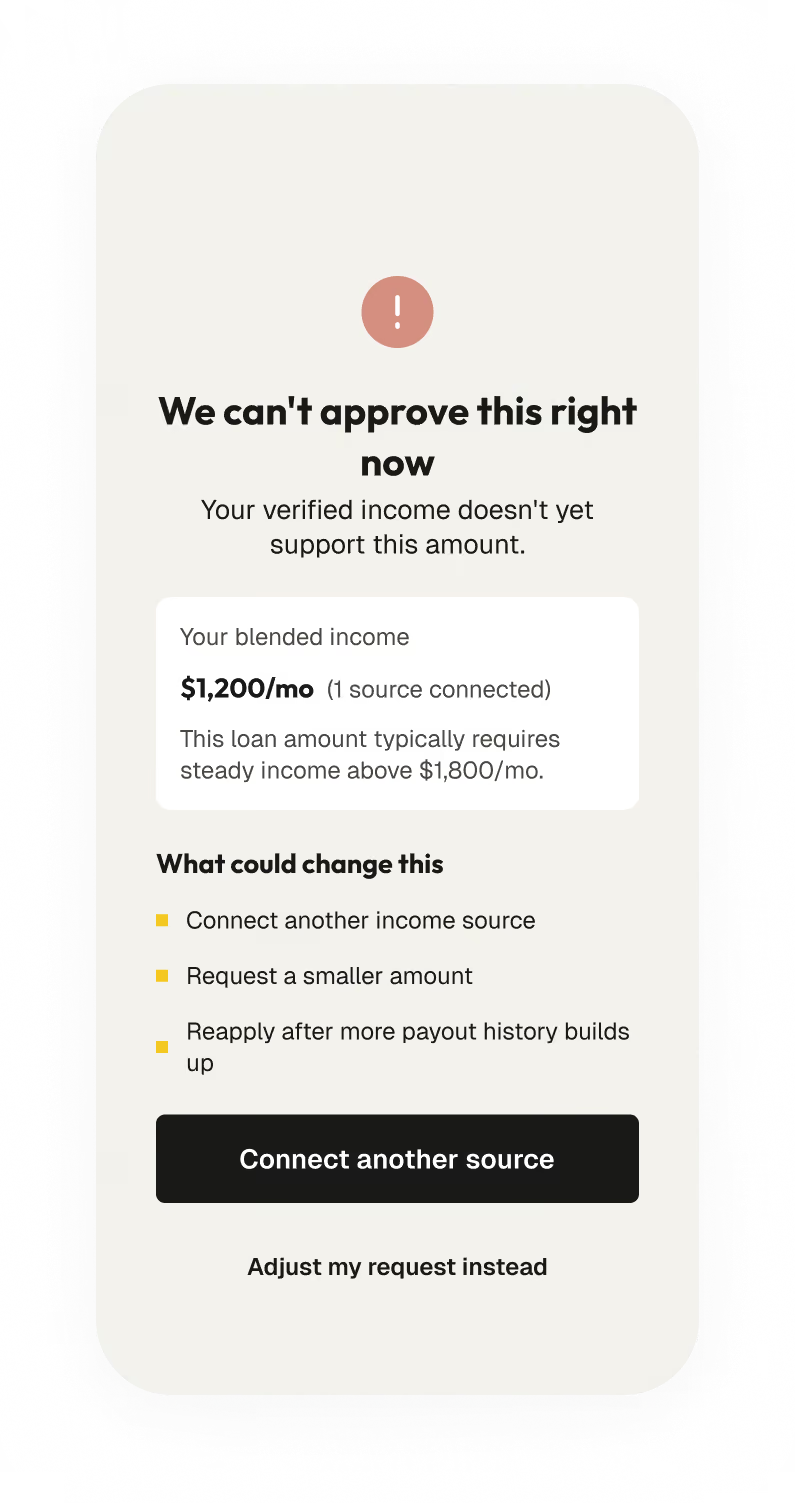
The outcome, explained. Every decision — approved, needs review, or declined — gets a plain-language reason. A decline shows the actual blended income and exactly why it fell short, plus a concrete "what could change this" list, rather than a generic rejection that reads as arbitrary.
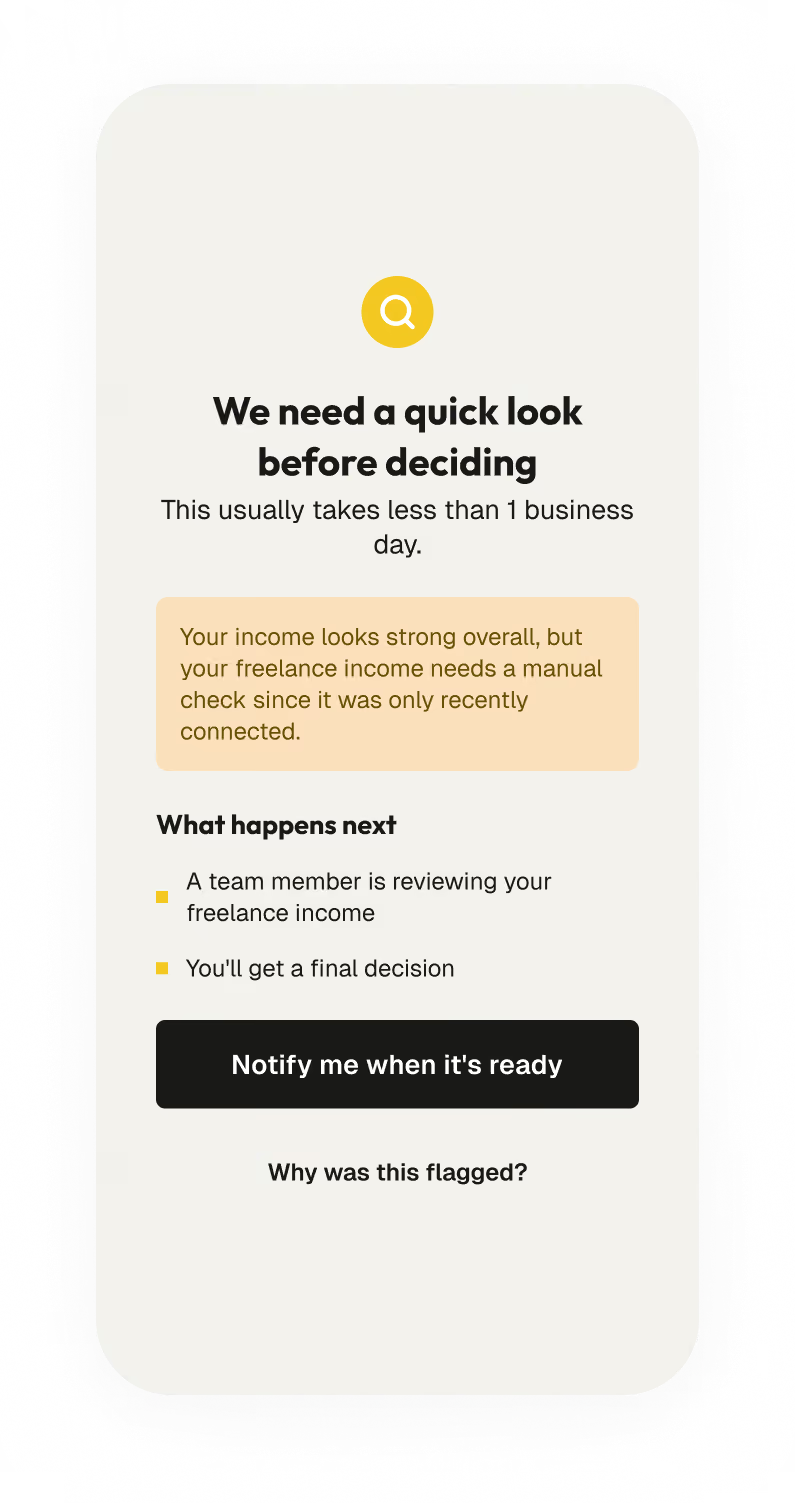
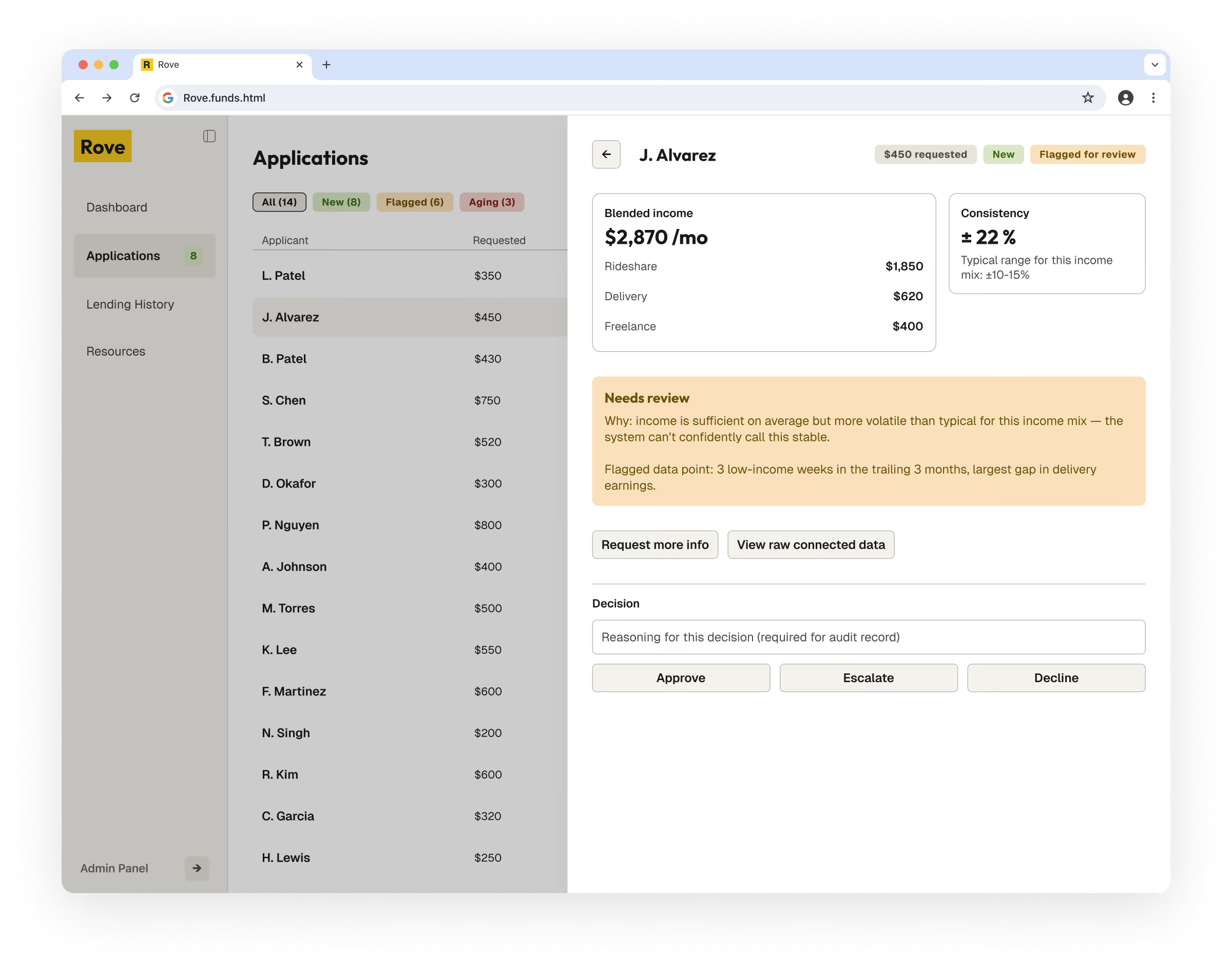
Mia's tool consolidates what would otherwise be four separate journey stages into one scrollable application-detail screen — applicant data, the recommendation, and decision actions together, the way underwriting tools actually work. The recommendation card leads with reasoning and the specific flagged data point, not a collapsed score, with a variance figure shown against a stated typical benchmark ("±22% vs. typical ±10–15%") so she isn't left guessing what normal looks like in data she wasn't trained on. A "request more info" action holds the case in a visible pending state without forcing her out of the screen, and decisions require structured reasoning captured for audit.
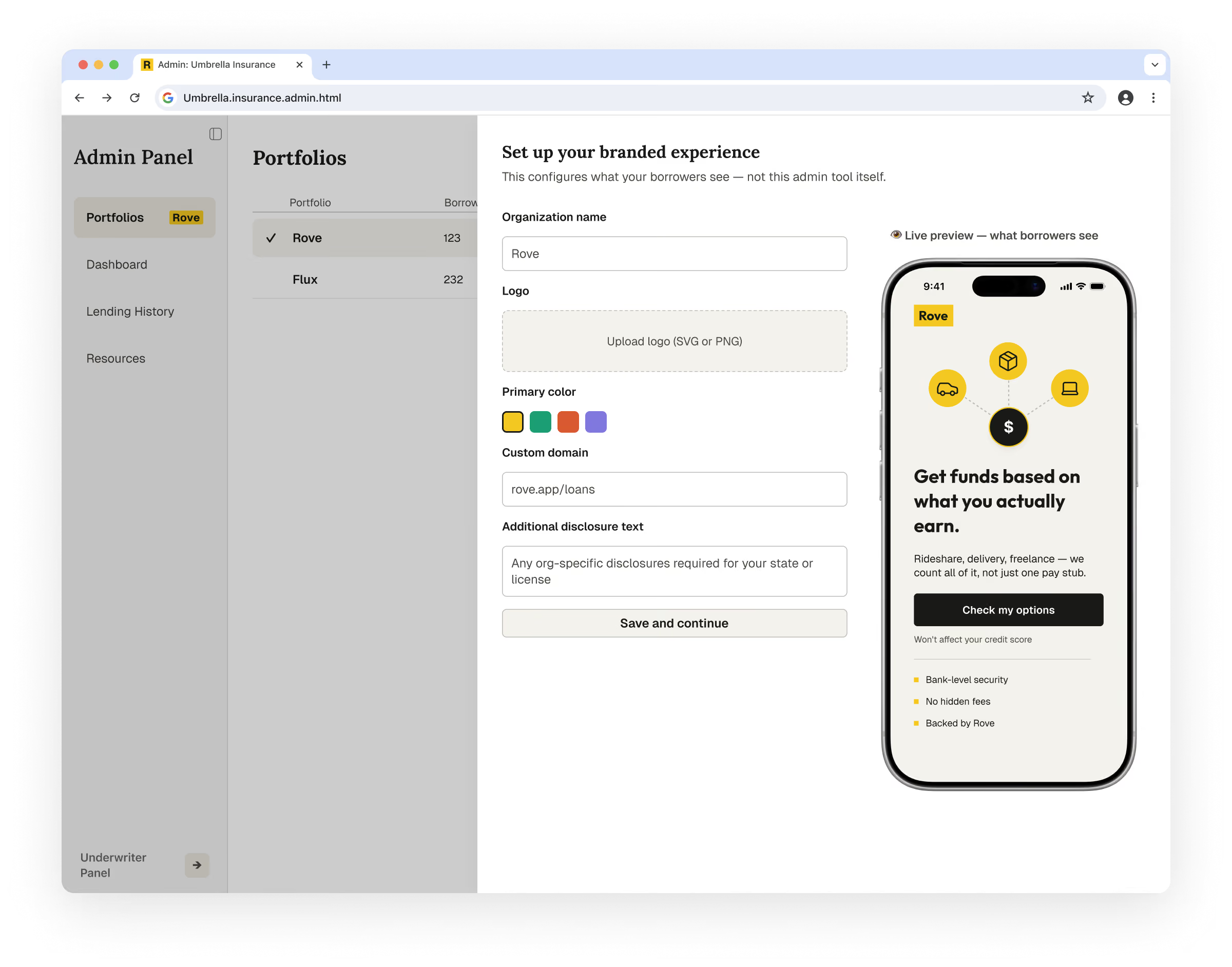
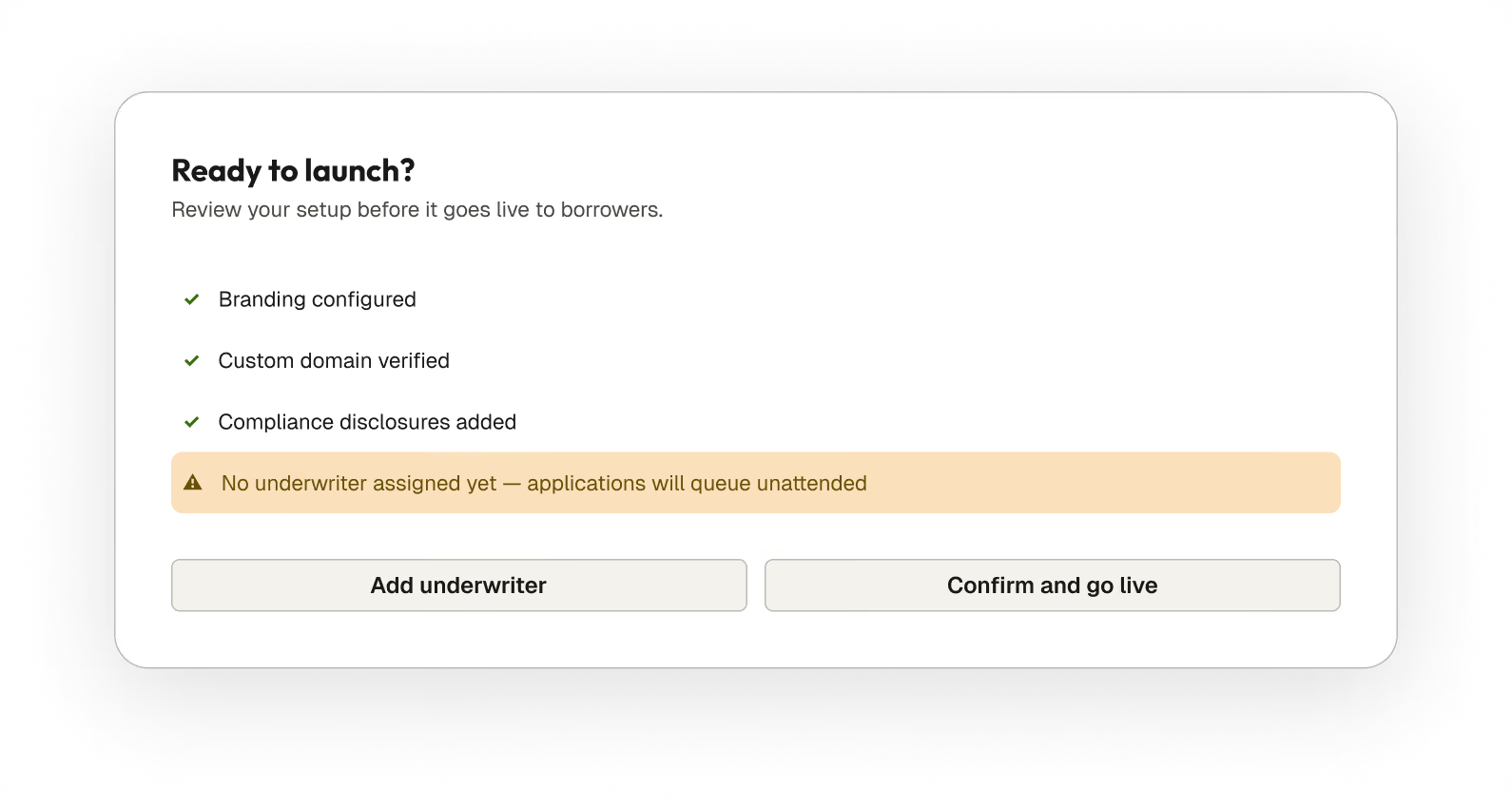
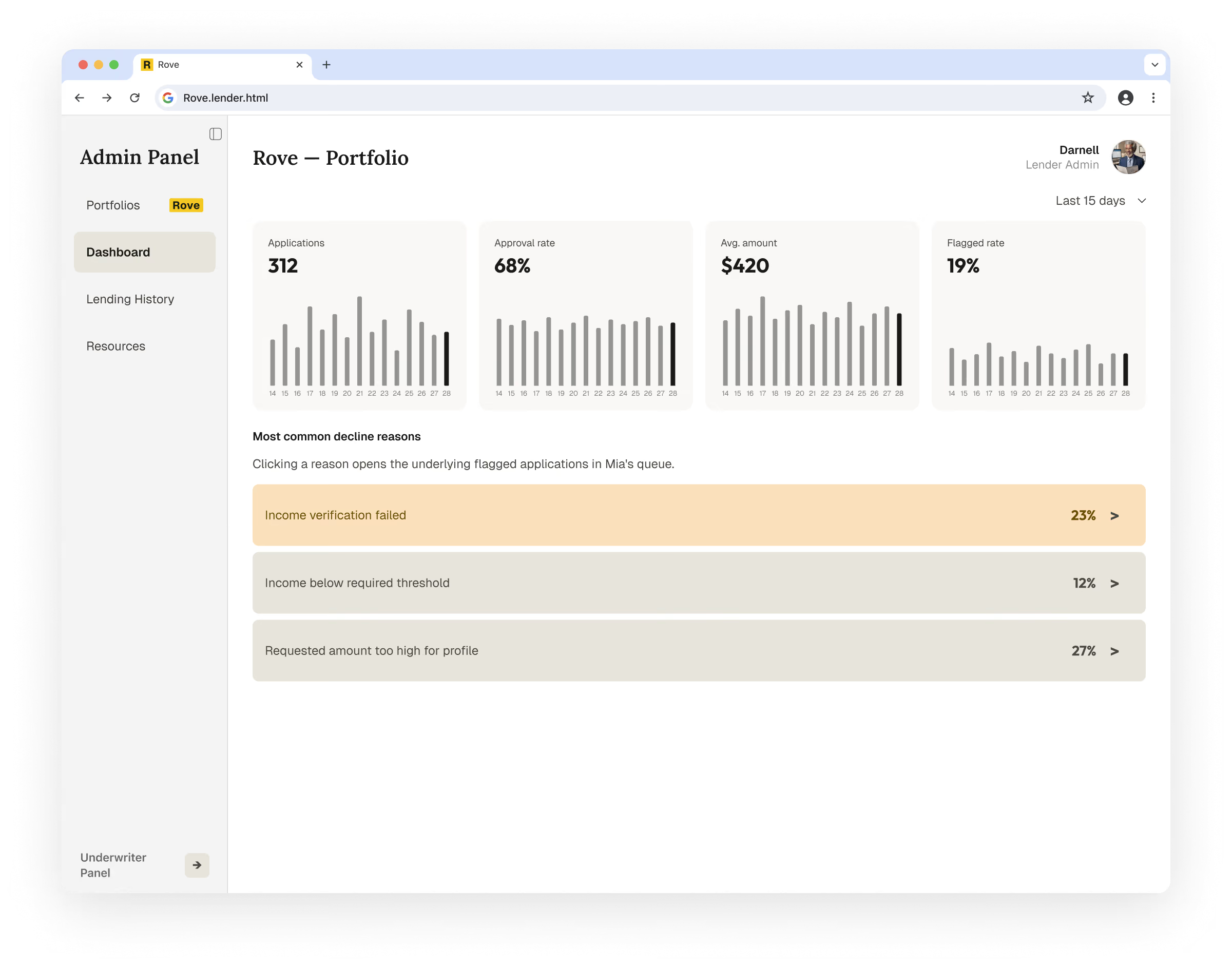
Darnell works inside one neutral, unbranded admin tool — shared by every lender on the platform — because there's no reason his own dashboard needs his company's colors and logo. What he configures through that tool is the borrower-facing wizard: logo, color, domain, and disclosures, confirmed against a live-rendered preview of the exact screens Jasmine will see, not imagined from a color swatch. A pre-launch checklist deliberately includes a blocking state ("no underwriter assigned yet") to prove it catches real configuration gaps rather than rubber-stamping. Once live, a portfolio dashboard gives him volume, approval rate, and decline-reason trends at a glance, with each metric clickable through to the underlying applications in Mia's queue.
Rove is a self-directed case study, not a shipped product — its impact is measured in the design decisions it forced, not usage metrics.
The income-blending and decision-explanation moments got the most design iteration in the project, ahead of standard form-filling steps, because the journey mapping showed that's exactly where a gig worker's trust in the system is won or broken.
The monetization logic is explicitly designed to optimize for the borrower's lowest expected cost rather than the lender's revenue — a real conflict of interest stated outright and held to, not left implicit.
The same blended-income and consistency logic surfaces three ways — to the borrower as a plain-language breakdown, to the underwriter as reasoning and benchmark context, to the lender as aggregated portfolio trends — without contradicting itself across any of them.
Brand Strategy
Brand Design
Persona & Journey Mapping
Design Systems