Design & AI Workflow
Design Handoff: From Claude Design to Claude Code
By Entify design team
·
5 min read
·
5/27/2026
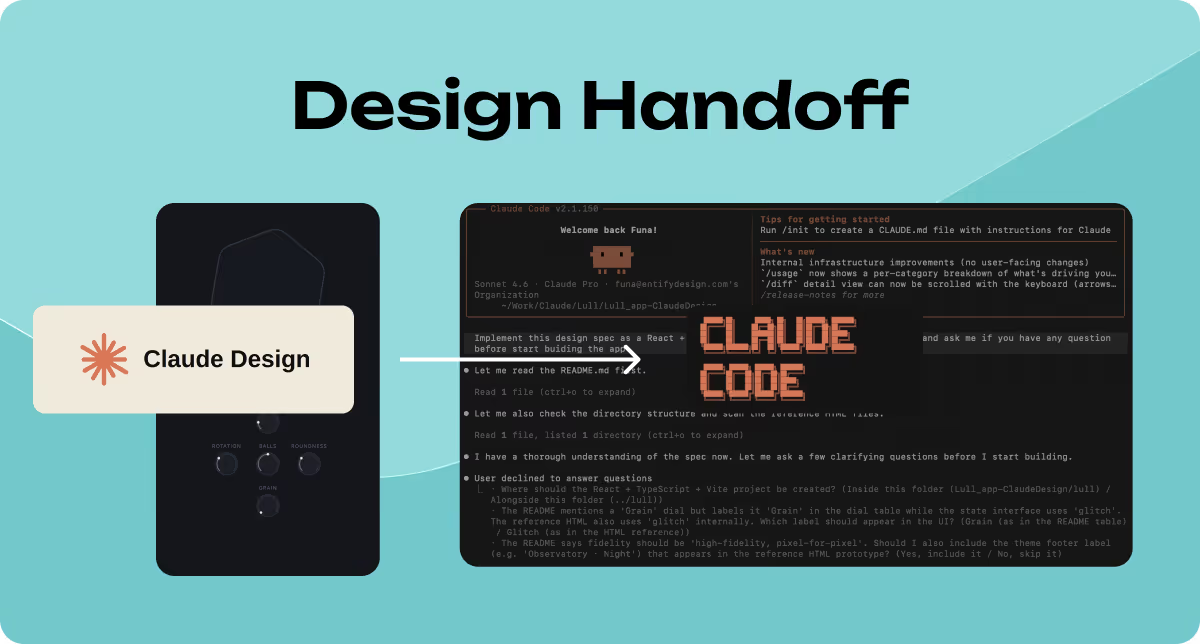
Part 6 of the Lull build series — the final phase, design handoff from Claude Design to Claude Code
One of the persistent friction points in product development is the handoff between design and engineering. Intent gets lost. Context gets dropped. The prototype and the final build end up in different places than anyone planned.
I wanted to test whether an AI-native workflow could reduce that friction — specifically, using Claude Design for exploration and Claude Code for implementation, with a structured handoff between them.
Here's what the experiment looked like, and what I found.
The Three-Stage Workflow
Stage 1: Design Exploration in Claude Design
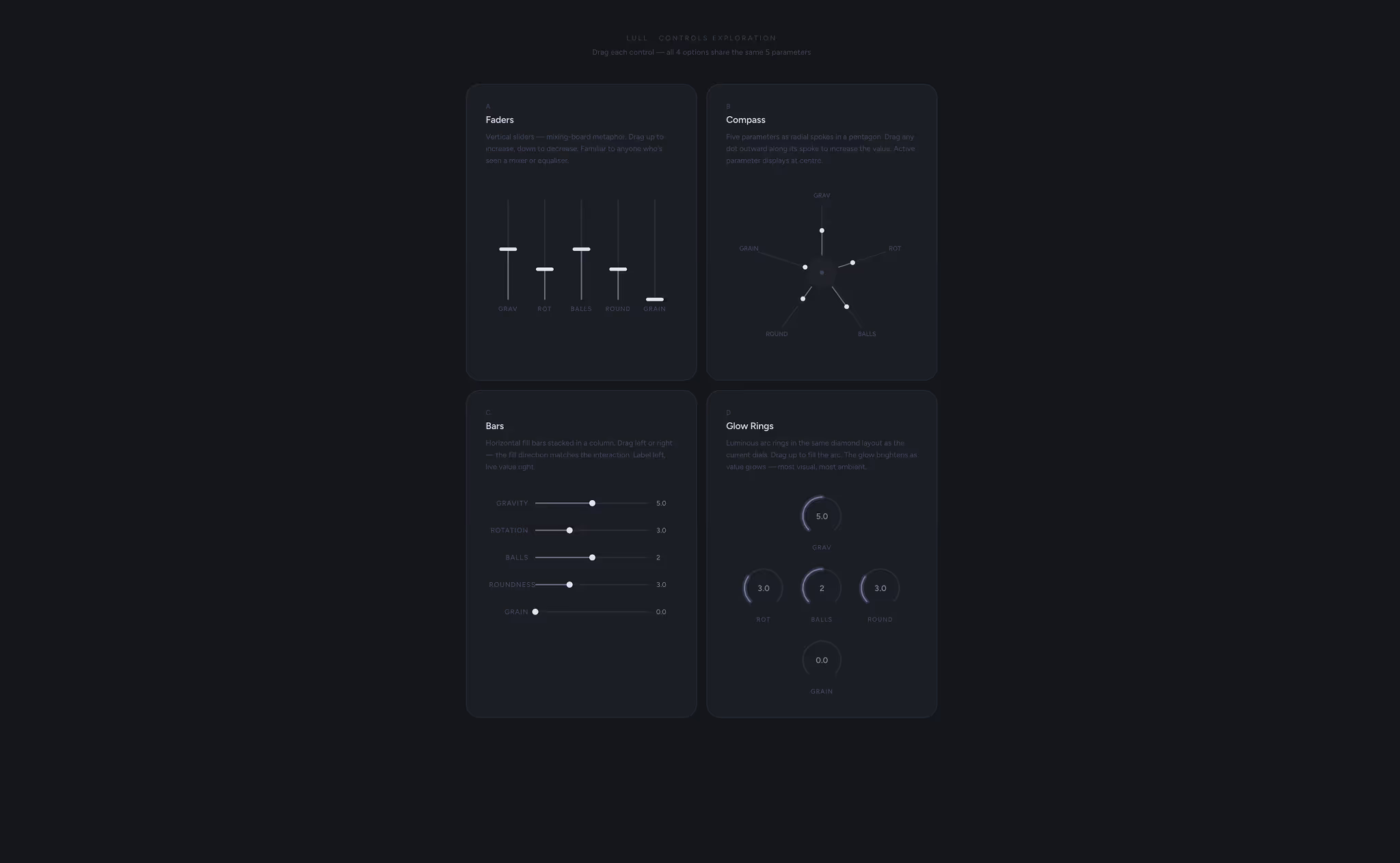
The first stage was about possibility, not decisions. I asked Claude Design to explore the visual and UX direction without committing to a single path — mapping the range before narrowing it.
I gave Claude Design a brief that defined the outer edges of the visual style I was open to, and asked it to iterate within that space. It worked well. The outputs were varied enough to be genuinely useful for decision-making, and stayed coherent with the brief rather than drifting into unrelated territory.
What worked: the ability to explore both UX structure and visual language in the same session, without having to context-switch between wireframing and visual design. Claude Design handled both as part of one continuous conversation.
Stage 2: Generating the Handoff Package
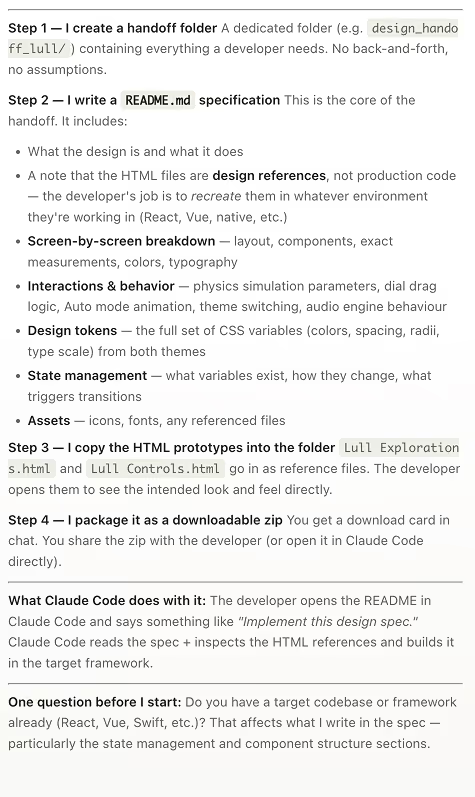
Once the design direction was set, I asked Claude Design to prepare a handoff package for Claude Code.
Before generating anything, it asked clarifying questions: Was there an existing codebase? What IDE would be used? Did I have stack preferences? These questions shaped the output significantly — the resulting package was tailored rather than generic.
Based on my choices (React, TypeScript, Vite), Claude Design produced:
1. README.md — covering the visual system, component structure, implementation notes, and any decisions made during the design phase
2. Prototype HTML file — a functional visual reference that Claude Code could read and build from
The package was complete in two ways: it communicated the aesthetic intent clearly, and it gave the implementer enough functional context to build without guessing.
Stage 3: Implementation in Claude Code
Claude Code read through the handoff package and implemented the application from there. The result wasn't a direct conversion of the prototype — it was a production-grade build that improved on it in several meaningful ways.
What the React build added that the HTML prototype didn't have:
The modularity point matters in practice: audio, physics logic, and individual UI components each live in their own files. Changes to one don't risk breaking the others. That's the difference between a prototype and something you can actually maintain.
Summary
Claude Design handled the exploration phase well — iterating on both UX and visual style within a defined direction, producing useful variation without losing coherence.
The handoff package was well-formed. It asked the right questions before generating output, and the resulting README and prototype carried both design intent and functional specification clearly.
Claude Code used the package to implement something more robust than the prototype, without fidelity loss from the design phase.
The overall observation: the handoff between these tools felt more like a continuous workflow than a context switch. What was communicated in the design phase arrived intact in the implementation.
This article is part of a series on building Lull — covering sound design iterations, design mistakes, and the full implementation process. Read the rest at entifydesign.com/our-works.